
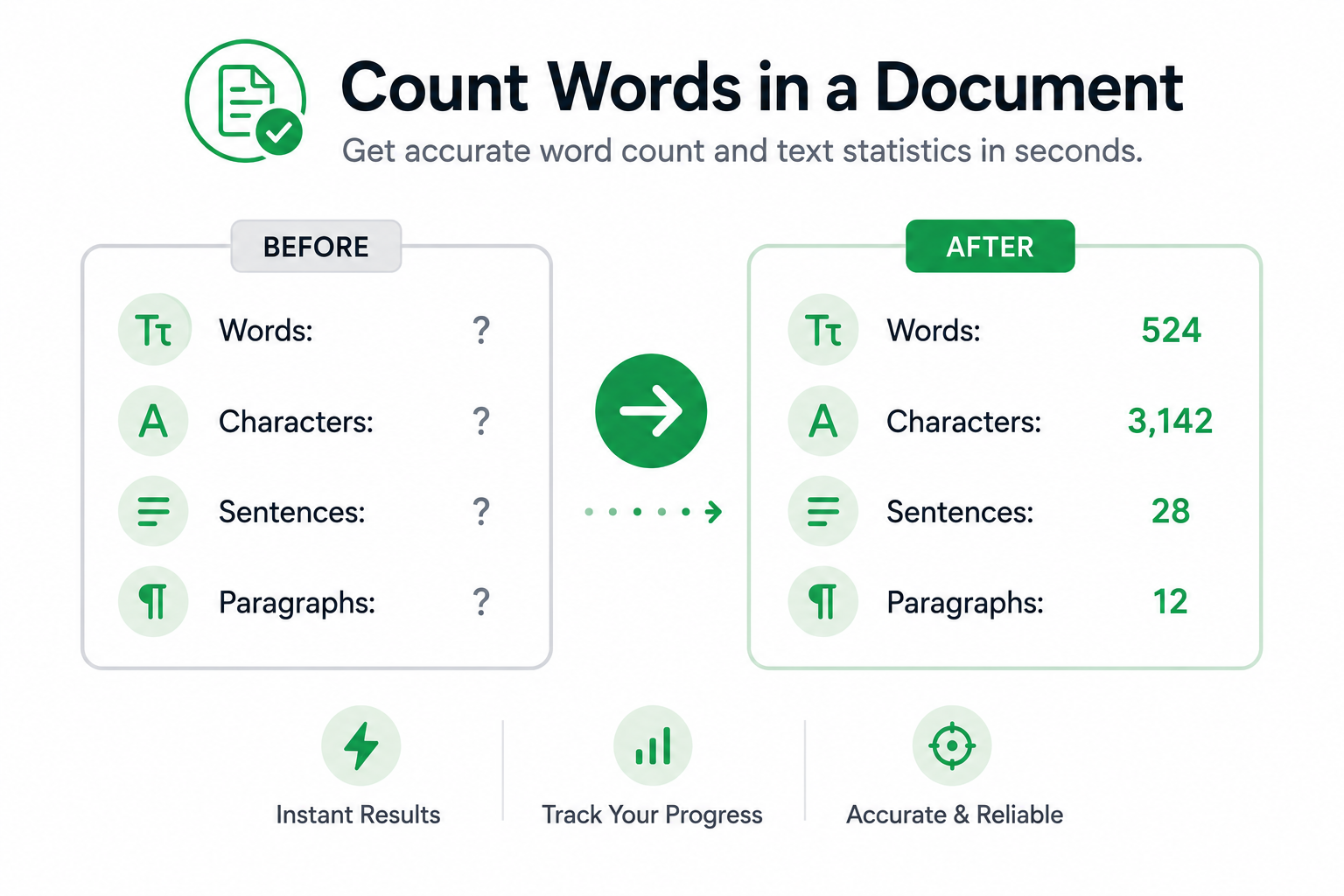
Word count is one of the most common ways to measure the length of written content. Whether you’re working on an essay, article, report, blog post, email, or assignment, knowing how many words are in a document can help you stay within requirements and better manage your writing.
If you’re wondering how to count words in a document, there are several simple methods available depending on the type of content you’re working with.
Why Count Words?
Word count can help writers, students, marketers, and professionals understand the length of a document and determine whether it meets specific requirements.
Common reasons for counting words include:
- Meeting assignment requirements
- Tracking writing progress
- Reviewing article length
- Managing blog post content
- Preparing marketing materials
- Measuring social media drafts
- Evaluating content before publishing
Common Word Count Examples
Different types of content often have different length requirements.
| Content Type | Typical Length |
|---|---|
| 50–300 words | |
| Blog Post | 500–2,000+ words |
| Article | 800–3,000+ words |
| Essay | Varies by assignment |
| Product Description | 50–300 words |
| Social Media Post | Usually much shorter |
The ideal length depends on the purpose of the content and any specific requirements.
Methods for Counting Words
There are several ways to determine the number of words in a document.
Count Words Manually
For short passages, words can be counted manually.
However, this method becomes impractical as documents become longer.
Use Word Processing Software
Many word processors include built-in word count features that automatically calculate document statistics.
This is useful when working with essays, reports, and other long-form documents.
Use a Word Counting Tool
A dedicated word counting tool can instantly calculate words, characters, sentences, and paragraphs as content is entered or edited.
This is often the fastest option when working with text from multiple sources.
Benefits of Tracking Word Count
Monitoring document length offers several advantages.
| Benefit | Description |
| Better Planning | Helps manage content length |
| Requirement Tracking | Ensures writing stays within limits |
| Progress Monitoring | Makes writing goals easier to track |
| Content Analysis | Provides insight into document structure |
| Publishing Preparation | Helps review content before publication |
Common Mistakes
Estimating Instead of Counting
Guessing document length can lead to inaccurate results, especially with longer content.
Ignoring Writing Requirements
Some assignments and publications have strict length requirements that should be checked before submission.
Focusing Only on Word Count
Length is important, but readability, organization, and content quality also matter.
Count Words Instantly
If you regularly write articles, essays, reports, blog posts, or other content, our Word Counter can instantly calculate words, characters, sentences, and paragraphs. It provides real-time statistics that help you track document length and writing progress more efficiently.
FAQs
Word count is the total number of words contained within a document, article, essay, email, or other piece of written content.
Word count helps measure document length and ensures content meets writing requirements, publishing guidelines, or assignment expectations.
Yes. Modern word counting tools can instantly analyze both short passages and long documents.
In many cases, numbers are included as part of the total count, although results may vary depending on the software or tool being used.
Yes. Many tools also provide character counts, sentence counts, and paragraph counts.