
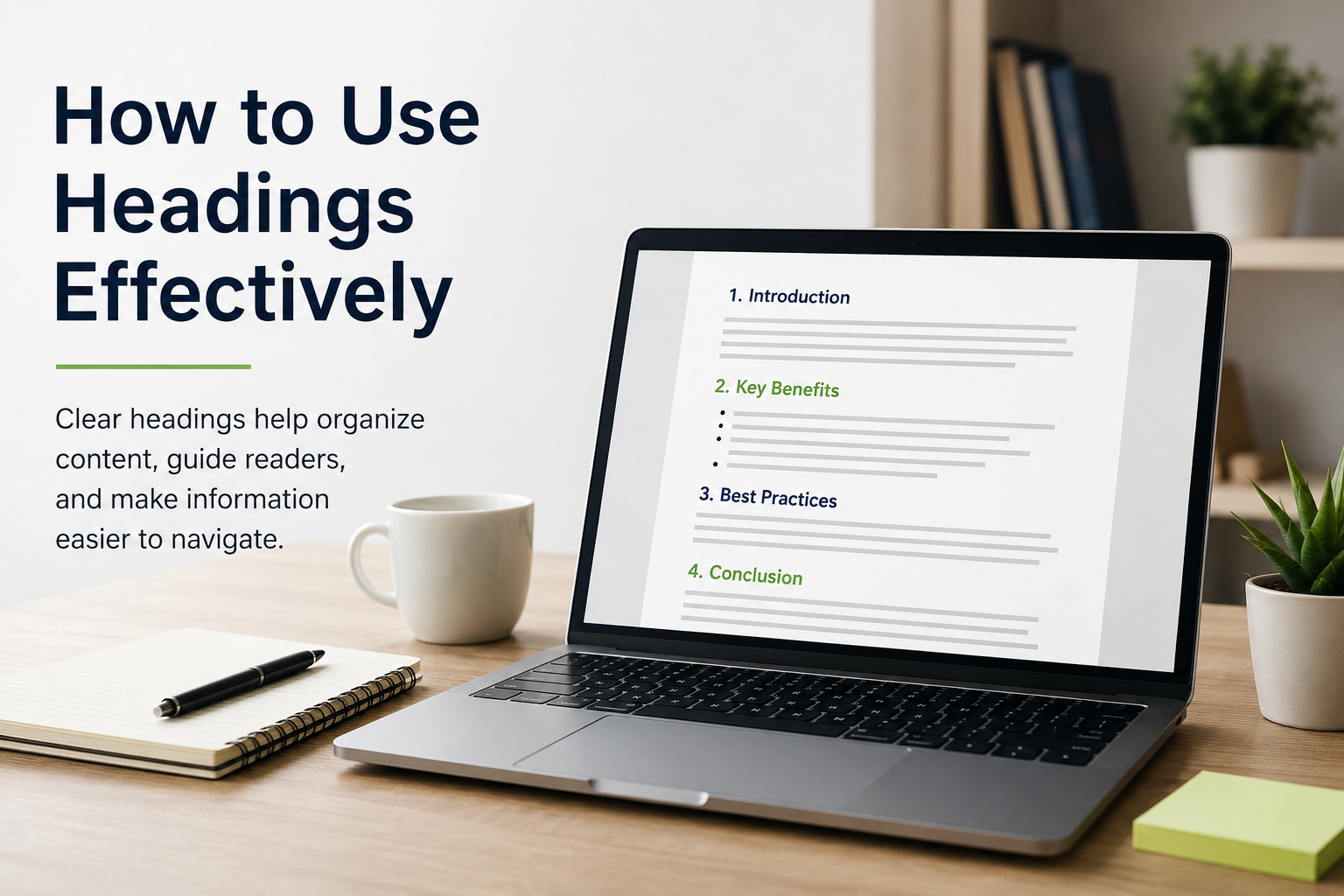
Headings help organize content into clear sections, making information easier to read, understand, and navigate. Whether you’re writing articles, reports, blog posts, emails, or website content, clear section labels help readers quickly find the information they need.
Well-organized content often relies on descriptive headings to create structure and improve the overall reading experience.
Why Clear Section Labels Matter
Readers frequently scan content before reading it in detail. Clear section labels help guide readers through information and make long documents easier to navigate.
Benefits include:
- Improved readability
- Better organization
- Easier navigation
- Clearer content structure
- Better user experience
- Increased engagement
As a result, readers can locate important information more quickly and understand content more easily.
Characteristics of Strong Section Labels
Strong section labels typically share several qualities.
Strong section labels are typically:
- Clear
- Descriptive
- Concise
- Relevant
- Consistent
Readers should understand what a section contains simply by reading its heading.
Examples of Strong and Weak Section Titles
The wording of a heading can affect how easily readers understand a section.
Weak Examples
- More Information
- Details
- Notes
- Miscellaneous
Strong Examples
- Benefits of Regular Exercise
- Common Formatting Mistakes
- Improving Content Readability
- Capitalization Rules Explained
Consequently, descriptive headings often improve navigation and comprehension.
Content Organization and Structure
Clear section labels help create structure throughout a document.
| Element | Purpose |
|---|---|
| Headings | Organize major topics |
| Subheadings | Divide content into smaller sections |
| Paragraphs | Present detailed information |
| Lists | Improve scannability |
When used consistently, headings help readers follow ideas in a logical order.
Learn more in our guide: Writing Structure: What It Is and Why It Matters.
Improving Readability With Better Structure
Readers often find organized content easier to scan than large blocks of unstructured text.
For example, headings can help readers:
- Locate information quickly
- Understand content flow
- Navigate longer articles
- Identify key topics
Because of this, organized content often provides a better reading experience.
Learn more in our guide: Readability: What It Is and Why It Matters.
Common Mistakes
Using Vague Labels
Generic section titles may not clearly communicate the content that follows.
Making Headings Too Long
Lengthy headings can become difficult to scan.
Skipping Headings Entirely
Large blocks of content without section breaks may overwhelm readers.
Using Inconsistent Formatting
Section labels should follow a consistent capitalization and formatting style. Consistent capitalization can also improve clarity and organization. Learn more in our guide: Capitalization Rules Explained.
Proper formatting can help maintain consistency. Learn more in our guide: What Is Text Formatting?
Organize Content More Effectively
Whether you’re writing articles, reports, emails, website content, or blog posts, clear headings can improve organization and readability. Descriptive section labels help readers understand content structure and navigate information more efficiently.
FAQs
Section labels help organize information, improve navigation, and make content easier to scan.
Effective headings are usually clear, concise, descriptive, and relevant to the content they introduce.
Yes. Organized content with descriptive section labels is often easier to understand and navigate.
In many cases, yes. Subheadings help divide large sections into smaller topics, making information easier to follow.
Yes. Clear headings and subheadings can improve content organization, user experience, and navigation.