
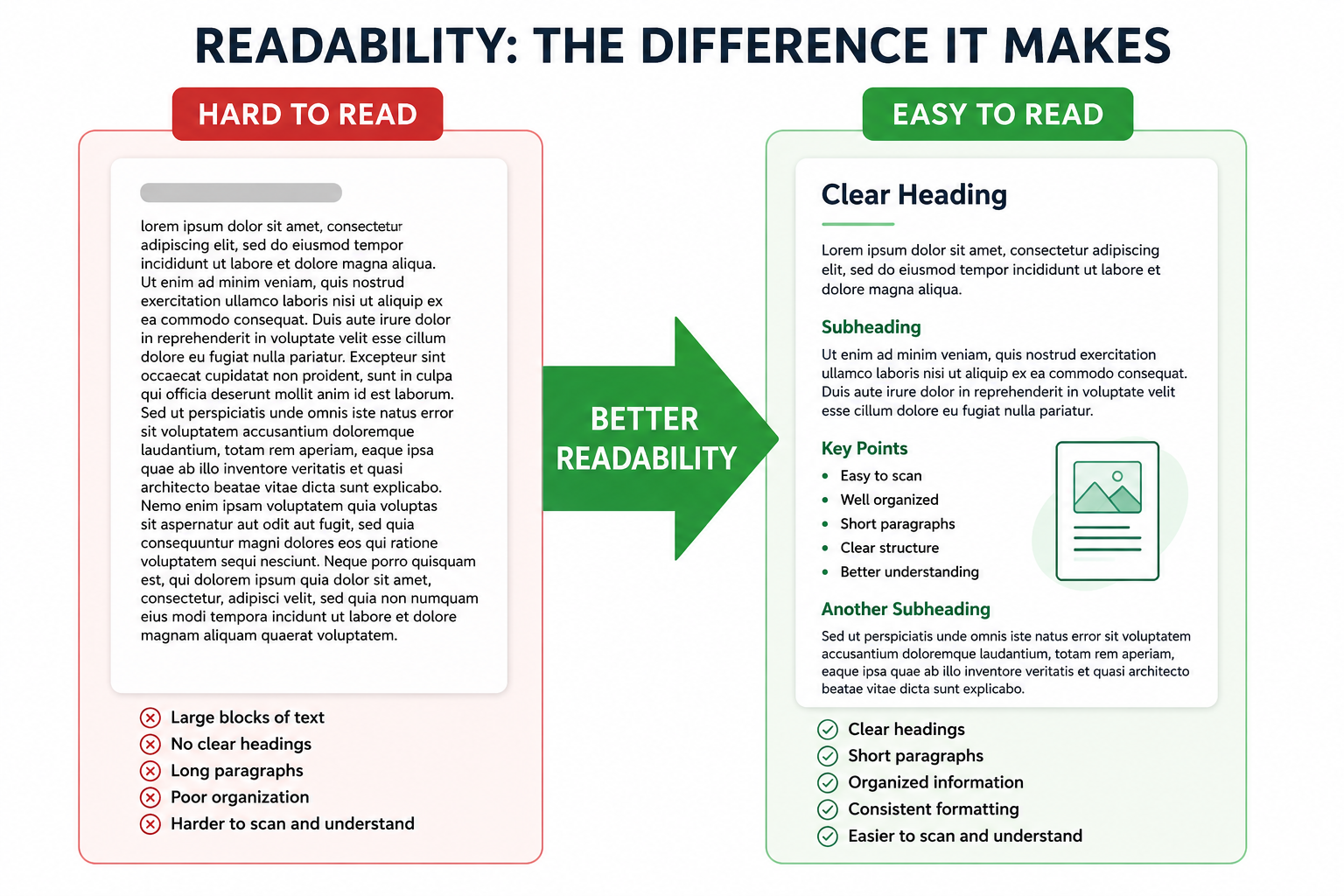
Readability refers to how easy written content is to read, understand, and navigate. Whether you’re creating articles, blog posts, reports, emails, website pages, or marketing content, readability plays an important role in how effectively information is communicated.
When content is easy to read, readers can quickly understand ideas and stay engaged. Poor readability, on the other hand, can make even valuable information difficult to follow.
Why Is Readability Important?
Readers often decide within seconds whether content is worth reading. Clear and readable content helps keep readers engaged while making information easier to understand.
Benefits of good readability include:
- Improved comprehension
- Better user experience
- Increased engagement
- Easier navigation
- More effective communication
- Greater accessibility
Content that is easy to read often performs better because readers can quickly find and understand the information they need.
Factors That Affect How Easy Content Is to Read
Several elements influence how readable content appears to readers.
| Factor | Potential Benefit |
|---|---|
| Paragraph Length | Shorter paragraphs are easier to scan |
| Headings | Help organize information into sections |
| Formatting | Improves visual organization |
| Sentence Structure | Clear sentences improve comprehension |
| Word Choice | Simpler language is often easier to understand |
| Content Organization | Helps readers follow ideas logically |
Improving even one of these areas can make content more accessible.
Examples of Readable Content
Readable content is typically organized and easy to navigate.
Low Readability
- Large blocks of text
- Few headings
- Long paragraphs
- Poor organization
- Inconsistent formatting
High Readability
- Clear headings
- Short paragraphs
- Logical organization
- Consistent formatting
- Easy-to-follow structure
Small adjustments can make a significant difference in the reading experience.
How to Make Content Easier to Read
Improving readability often begins with reviewing how information is presented.
Helpful strategies include:
- Use clear and descriptive headings.
- Break large sections into smaller paragraphs.
- Organize information logically.
- Use lists when appropriate.
- Remove unnecessary formatting issues.
- Review content for clarity and flow.
- A Word Counter can also help writers evaluate article length and maintain balance across sections.
Proper organization also plays an important role in readability. Learn more in our guide: Writing Structure: What It Is and Why It Matters.
Formatting and User Experience
Formatting can have a major impact on how easily content is understood.
For example:
| Formatting Improvement | Potential Benefit |
| Clear headings | Easier navigation |
| Consistent spacing | Better visual flow |
| Organized paragraphs | Improved comprehension |
| Proper capitalization | More professional appearance |
| Clean formatting | Better user experience |
Good formatting supports readability by making information easier to scan and understand. Learn more in our guide: What Is Text Formatting?
Common Mistakes
Writing Long Paragraphs
Large blocks of text can overwhelm readers and make content more difficult to follow.
Using Poor Organization
Information presented without a logical structure can be difficult to understand.
Ignoring Formatting
Formatting issues such as inconsistent spacing, unnecessary line breaks, and poor organization can reduce readability.
Overcomplicating Content
Complex language and unnecessary jargon may make information harder to understand.
Improve Readability Effectively
Whether you’re writing articles, reports, emails, blog posts, or website content, readability can significantly affect how readers interact with your work. Clear organization, effective formatting, and logical structure help create content that is easier to read, understand, and navigate.
FAQs
Readability is a measure of how easy content is to read, understand, and navigate.
Good readability helps readers understand information more quickly and improves the overall user experience.
Factors such as formatting, paragraph length, headings, organization, sentence structure, and word choice can all affect readability.
Yes. Clear formatting often makes content easier to scan and understand.
Yes. Readable content can improve engagement, navigation, and overall user experience.