
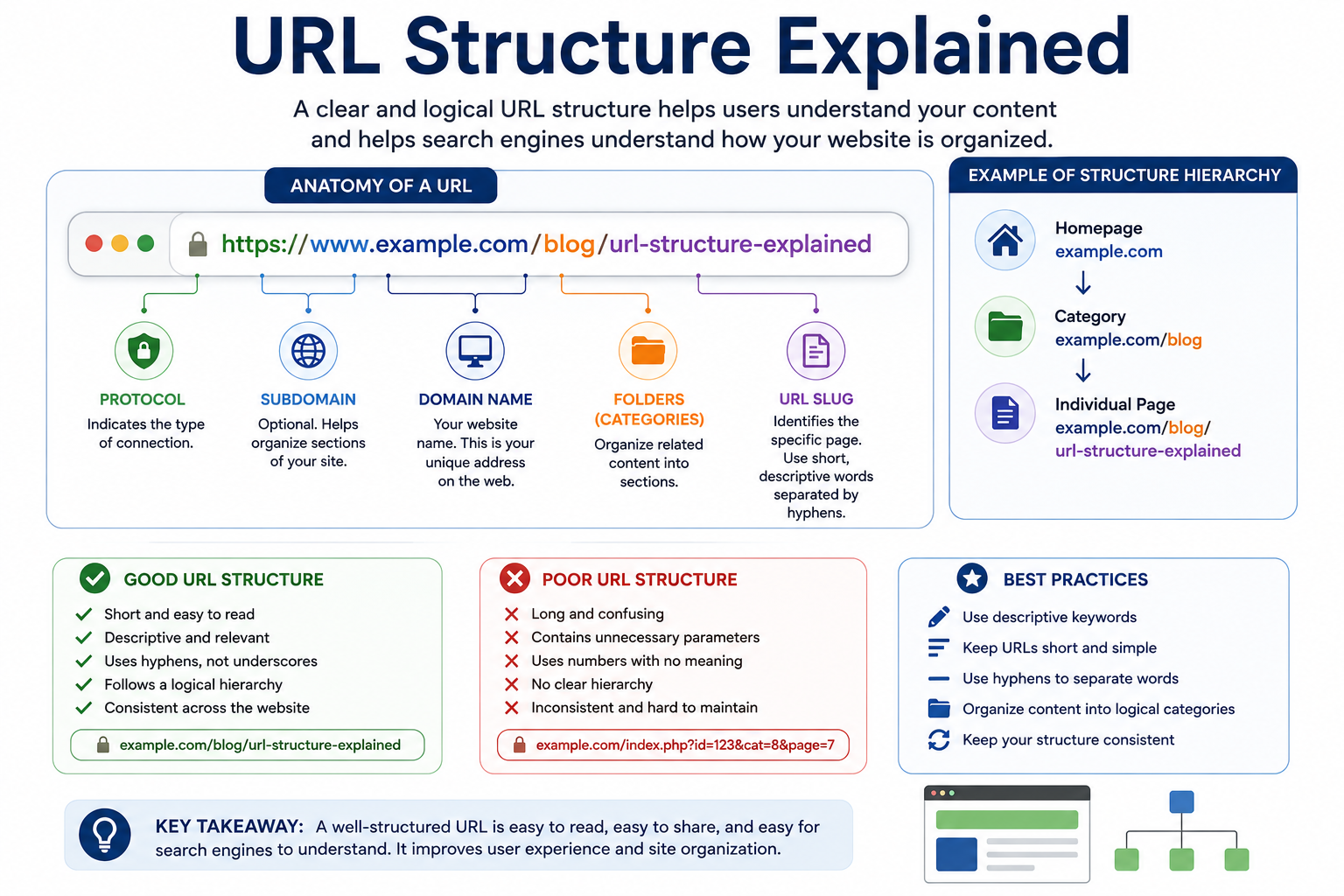
URL structure refers to the way web addresses are organized on a website. A clear and logical structure helps users understand where they are within a site while also helping search engines interpret how content is organized.
Well-structured URLs can improve navigation, readability, and overall website organization.
Why Is URL Structure Important?
Every page on a website has a unique address. The way those addresses are organized can influence how easily users and search engines understand the site’s content.
Benefits of a logical URL structure include:
- Improved readability
- Better website organization
- Easier navigation
- Clearer content hierarchy
- Improved user experience
- More consistent page organization
As a result, visitors can more easily understand the relationship between pages and sections of a website.
Common Elements
Most website addresses contain several components.
| Element | Purpose |
|---|---|
| Domain Name | Identifies the website |
| Folders | Group related content |
| URL Slug | Identifies the specific page |
| Hyphens | Separate words for readability |
| Hierarchy | Shows content relationships |
Together, these elements create a logical framework for organizing content.
Example of URL Structure
Homepage
example.comCategory Page
example.com/blogIndividual Article
example.com/blog/url-structure-explainedThis type of organization can help users understand how content is grouped throughout a website.
Learn more in our guide: What Is a URL Slug?
Characteristics of a Good Structure
Well-organized web addresses are often:
- Easy to read
- Descriptive
- Consistent
- Logical
- Relevant to the page topic
- Free from unnecessary complexity
Simple structures are often easier for visitors to understand and navigate.
URL Structure and SEO
Search engines use many signals to understand web pages. Clear organization can help provide additional context about content relationships and site structure.
For example, organized URLs can:
- Help users understand page topics
- Support website navigation
- Improve content organization
- Create a cleaner browsing experience
Learn more in our guide: SEO Friendly URLs Explained.
Common Mistakes
Using Long or Confusing URLs
Overly complex addresses can be difficult for users to read and share.
Creating Inconsistent Structures
Using different organizational patterns throughout a site can create confusion.
Adding Unnecessary Words
Shorter and more descriptive URLs are often easier to understand.
Ignoring Content Hierarchy
Related content should generally follow a logical organizational structure.
Build a Clear Website Structure
Whether you’re managing a blog, business website, resource site, or online store, a logical URL structure can improve organization and usability. Clear web addresses help visitors navigate content more easily and understand how information is connected throughout a website.
FAQs
URL structure refers to the organization and arrangement of web addresses across a website.
A logical structure can improve navigation, organization, and user experience.
A URL slug is the portion of a web address that identifies a specific page.
Yes. Clear organization helps users understand how content is grouped and related.
Good structures are typically descriptive, organized, consistent, and easy to understand.