
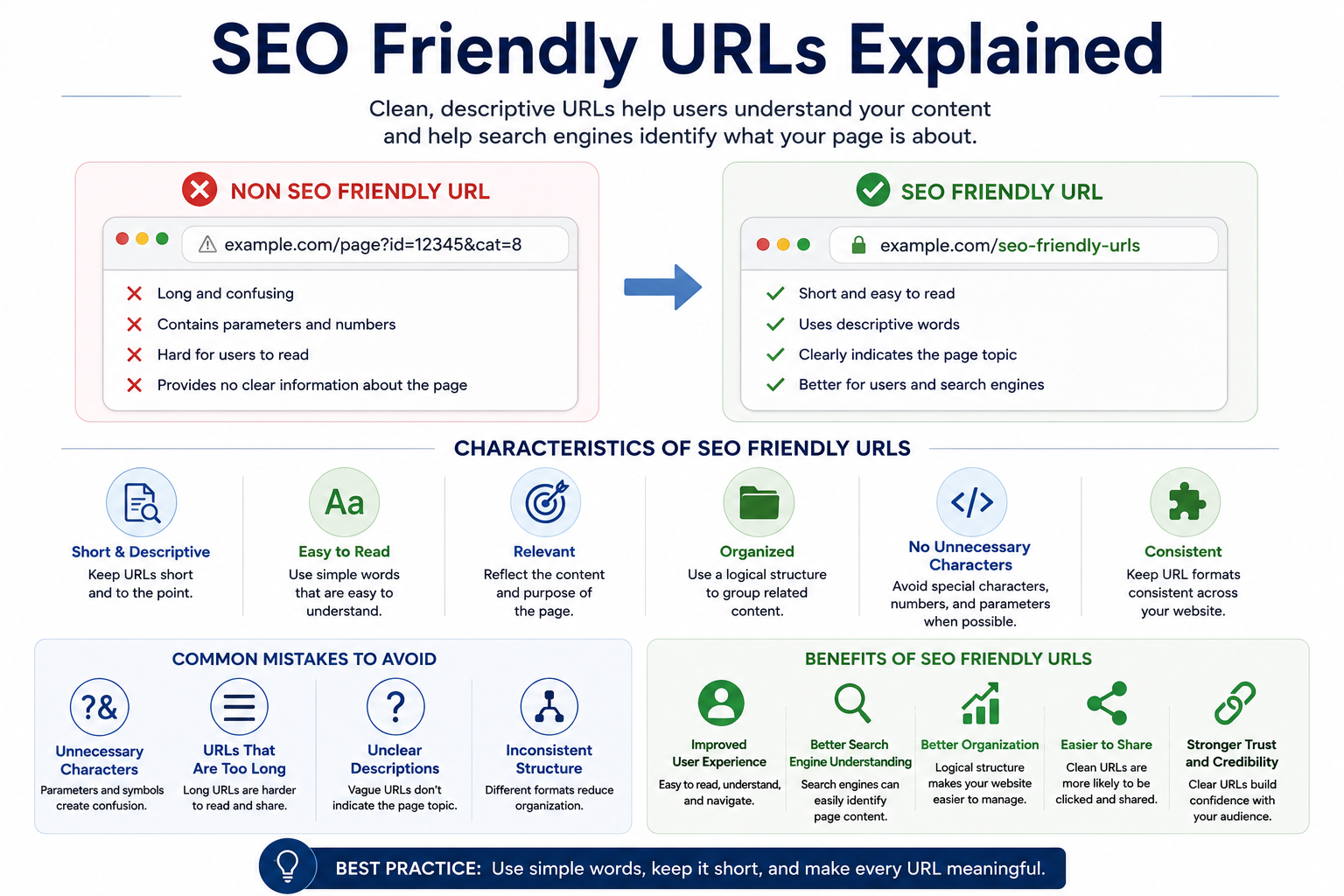
SEO friendly URLs are web page addresses that are easy for both users and search engines to read and understand. A well-structured URL can help visitors identify what a page is about before they click, while also providing useful context to search engines.
Clear URLs often improve usability, organization, and navigation across a website.
Why Are SEO Friendly URLs Important?
URLs are one of the first things users and search engines encounter when accessing a page.
Benefits of SEO friendly URLs include:
- Improved readability
- Better user experience
- Clearer page organization
- Easier navigation
- Improved sharing and linking
- Better understanding of page topics
As a result, visitors can more easily identify relevant content and navigate a website more efficiently.
Characteristics of SEO Friendly URLs
Well-structured URLs typically share several common characteristics.
SEO friendly URLs are often:
- Short and descriptive
- Easy to read
- Relevant to the page topic
- Organized logically
- Free from unnecessary characters
- Consistent throughout the website
These characteristics help create cleaner and more understandable web addresses.
Examples
Less User-Friendly URL
example.com/page?id=12345&cat=8SEO Friendly URL
example.com/seo-friendly-urlsThe second example provides a clearer indication of the page topic and is generally easier for users to understand.
URLs and Website Organization
URL structure can play an important role in how content is organized across a website.
| Element | Purpose |
|---|---|
| URL Slug | Identifies the page topic |
| Folders | Group related content |
| Keywords | Provide context |
| Consistency | Improves organization |
| Simplicity | Improves usability |
A logical structure can help visitors navigate content more effectively.
Learn more in our guide: What Is a URL Slug?
URLs and User Experience
Clear web addresses can contribute to a better user experience.
For example, users can often:
- Understand page topics more quickly
- Navigate websites more easily
- Share links with greater confidence
- Identify relevant content before clicking
Because of this, many websites prioritize clean and descriptive URLs.
Common Mistakes
Using Unnecessary Characters
Long strings of numbers, symbols, or parameters can make URLs more difficult to understand.
Making URLs Too Long
Overly long web addresses may be harder for users to read and share.
Using Unclear Descriptions
URLs should generally provide some indication of the page topic.
Creating Inconsistent Structures
Using different URL formats throughout a website can reduce organization and consistency.
Create Cleaner URLs
Whether you’re managing a blog, business website, online store, or resource site, clear URLs can improve organization and usability. Descriptive web addresses help visitors understand content more easily and contribute to a better browsing experience.
FAQs
SEO friendly URLs are web addresses that are easy to read, descriptive, and organized in a way that helps users and search engines understand page content.
URLs help identify page topics, improve navigation, and contribute to a better user experience.
Clear wording, logical organization, descriptive slugs, and consistent structure often contribute to a more user-friendly URL.
In many cases, descriptive words that reflect the page topic can help make URLs easier to understand.
Yes. A logical URL structure can help organize content and make navigation easier for visitors.