
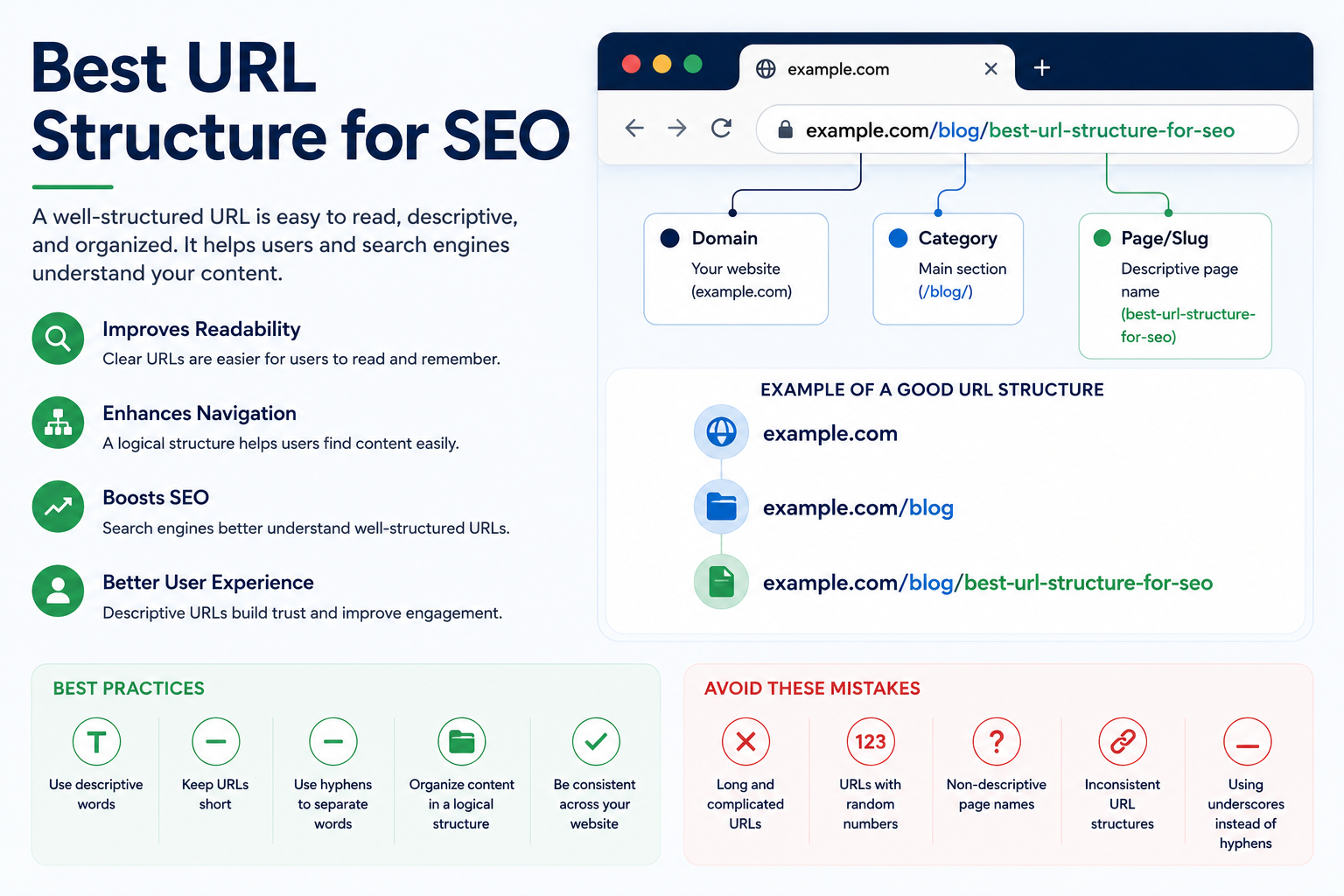
A well-organized URL structure helps users and search engines understand how content is arranged across a website. Clear web addresses can improve navigation, readability, and overall site organization while making it easier for visitors to identify page topics.
Although there is no single perfect format for every website, several best practices are widely recommended.
Why Does URL Structure Matter?
URLs help identify page topics and show how content is organized.
Benefits of a logical structure include:
- Improved readability
- Better navigation
- Clearer content hierarchy
- Improved user experience
- Easier content organization
- More consistent website structure
As a result, visitors can more easily understand how pages relate to one another.
Characteristics of a Strong URL Structure
Well-organized web addresses are often:
- Short and descriptive
- Easy to read
- Relevant to the page topic
- Organized logically
- Consistent throughout the website
- Free from unnecessary complexity
Simple structures are generally easier for users to understand and navigate.
Example of a Well-Organized Structure
Homepage:
example.comCategory Page:
example.com/blogArticle Page:
example.com/blog/best-url-structure-for-seoThis structure helps show the relationship between sections and individual pages.
Best Practices
Use Descriptive Words
Page addresses should clearly indicate the topic of the content.
Keep URLs Short
Shorter addresses are often easier to read, remember, and share.
Use Hyphens Between Words
Hyphens typically improve readability by separating words clearly.
Organize Related Content Together
Categories and folders can help group related topics.
Maintain Consistency
Using a consistent organizational pattern throughout a website can improve usability.
Examples
Less Organized:
example.com/page?id=5827More Organized:
example.com/seo-friendly-url-examplesThe second example provides more context about the page content.
Learn more in our guide: SEO Friendly URL Examples.
Common Mistakes
Creating Long URLs
Overly long addresses can become difficult to read and share.
Using Random Numbers
Numbers without context often provide little information about page topics.
Ignoring Website Hierarchy
Related pages should generally follow a logical organizational structure.
Using Inconsistent Formats
Different URL patterns throughout a site can create confusion.
Learn more in our guide: URL Structure Explained.
Build Better Website Addresses
Whether you’re managing a blog, business website, resource site, or online store, a clear URL structure can improve organization and usability. Following the Best URL Structure for SEO practices helps create descriptive web addresses that are easier for users to understand and navigate.
FAQs
A logical structure is typically descriptive, organized, easy to read, and relevant to the page topic.
Descriptive words that accurately reflect page content can make URLs easier to understand.
Shorter web addresses are often easier for users to read, share, and remember.
A URL slug is the portion of a web address that identifies a specific page.
Learn more in our guide: What Is a URL Slug?
Yes. A clear structure can help organize content and improve navigation throughout a website.