
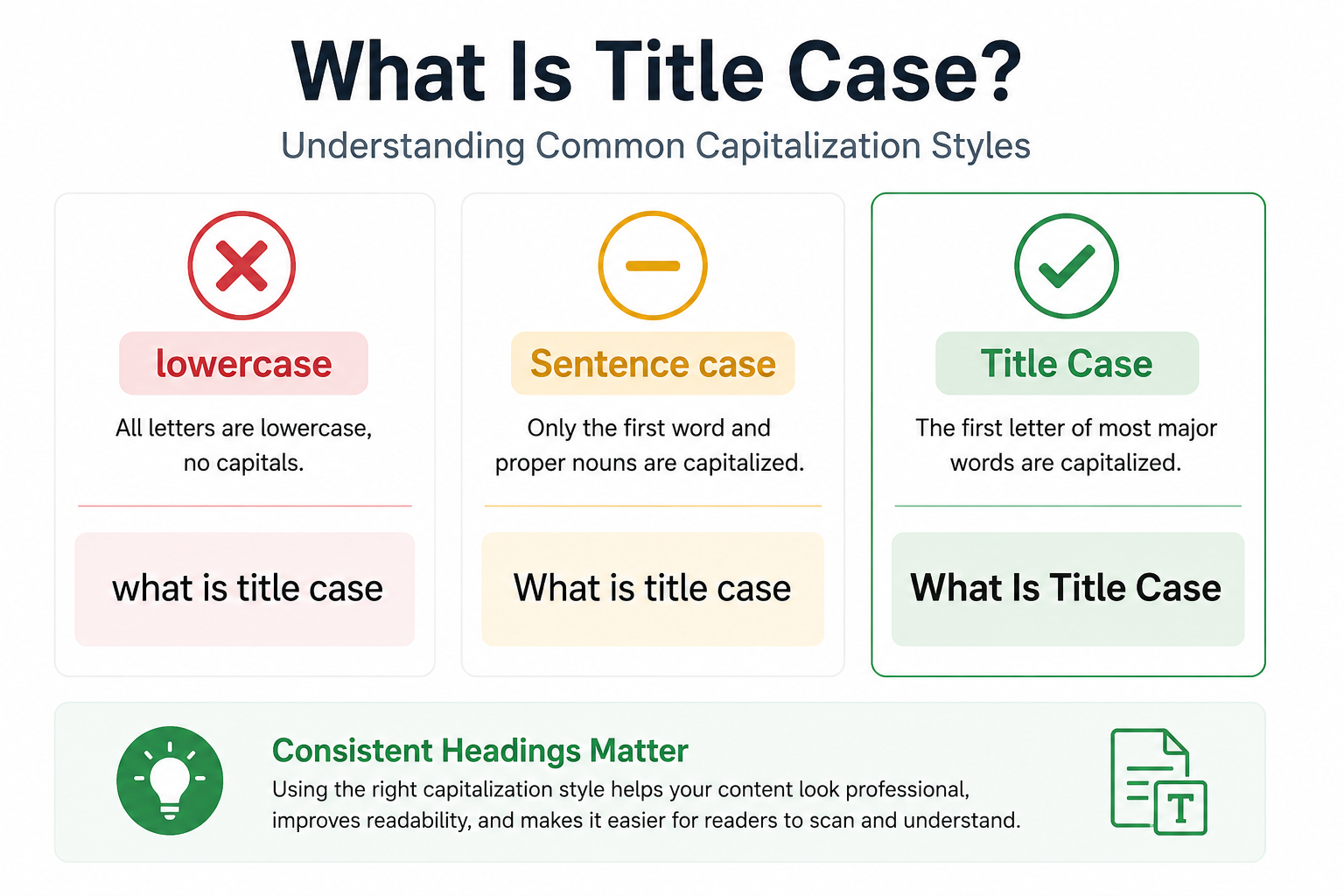
Title case is a capitalization style commonly used for titles, headings, headlines, and page names. If you’ve ever wondered what title case is, it’s the approach of capitalizing the first letter of most major words while leaving certain shorter connecting words lowercase depending on the style guide being followed.
Additionally, writers use this style in books, articles, presentations, websites, and marketing materials because it helps important text stand out and remain easy to read.
Why Is This Capitalization Style Important?
The way a title is presented can influence how readers perceive and interact with content.
Benefits of using a consistent capitalization style include:
- Improved readability
- Better visual organization
- More professional presentation
- Easier scanning of headings
- Greater consistency across content
- Improved user experience
Clear and consistent headings can help readers quickly identify topics and navigate information.
How Does Title Case Work?
In most style guides, major words are capitalized while certain shorter words may remain lowercase.
Words that are often capitalized include:
- Nouns
- Pronouns
- Verbs
- Adjectives
- Adverbs
However, the exact rules can vary slightly depending on the style guide being used.
Examples
| Style | Example |
|---|---|
| lowercase | sample article heading |
| Sentence case | Sample article heading |
| Title Case | What Is Title Case |
| UPPER CASE | WHAT IS TITLE CASE |
As a result, these differences help writers choose the most appropriate formatting style for different situations.
Where Is This Style Commonly Used?
For example, writers commonly use major-word capitalization in:
- Blog post titles
- Article headlines
- Book titles
- Presentation headings
- Website page titles
- Marketing materials
- Navigation menus
Therefore, writers often use this approach whenever text functions as a title or heading.
Comparing Common Capitalization Styles
Different capitalization styles serve different purposes.
| Style | Typical Use |
| lowercase | Casual text and informal content |
| Sentence case | Articles, paragraphs, and standard writing |
| Title Case | Titles and headings |
| UPPER CASE | Emphasis and short labels |
Additionally, choosing a consistent approach helps create a more professional appearance.
To learn more about another common style, see our guide: Title Case vs Sentence Case.
Common Mistakes
Mixing Multiple Styles
Using different capitalization styles throughout the same document can create inconsistency.
Capitalizing Every Word
Many style guides leave certain short words lowercase.
Ignoring Consistency
Headings should generally follow the same capitalization approach throughout a document.
Not Following a Style Guide
Different organizations may use different capitalization rules. Following one style consistently is often more important than the specific style chosen.
Using Title Case Effectively
Whether you’re creating blog posts, website pages, articles, presentations, or marketing content, consistent capitalization can improve readability and presentation. Understanding when and how to use title-style capitalization can help create cleaner, more professional headings throughout your content.
FAQs
It is a capitalization style that capitalizes the first letter of most major words in a title or heading.
It is commonly used for article titles, blog posts, book titles, page headings, and presentation titles.
Sentence case typically capitalizes only the first word and proper nouns, while this style capitalizes most major words.
It helps create clear, professional-looking titles that are easy to scan and read.
No. Many style guides leave certain short words lowercase depending on their function within the title.