
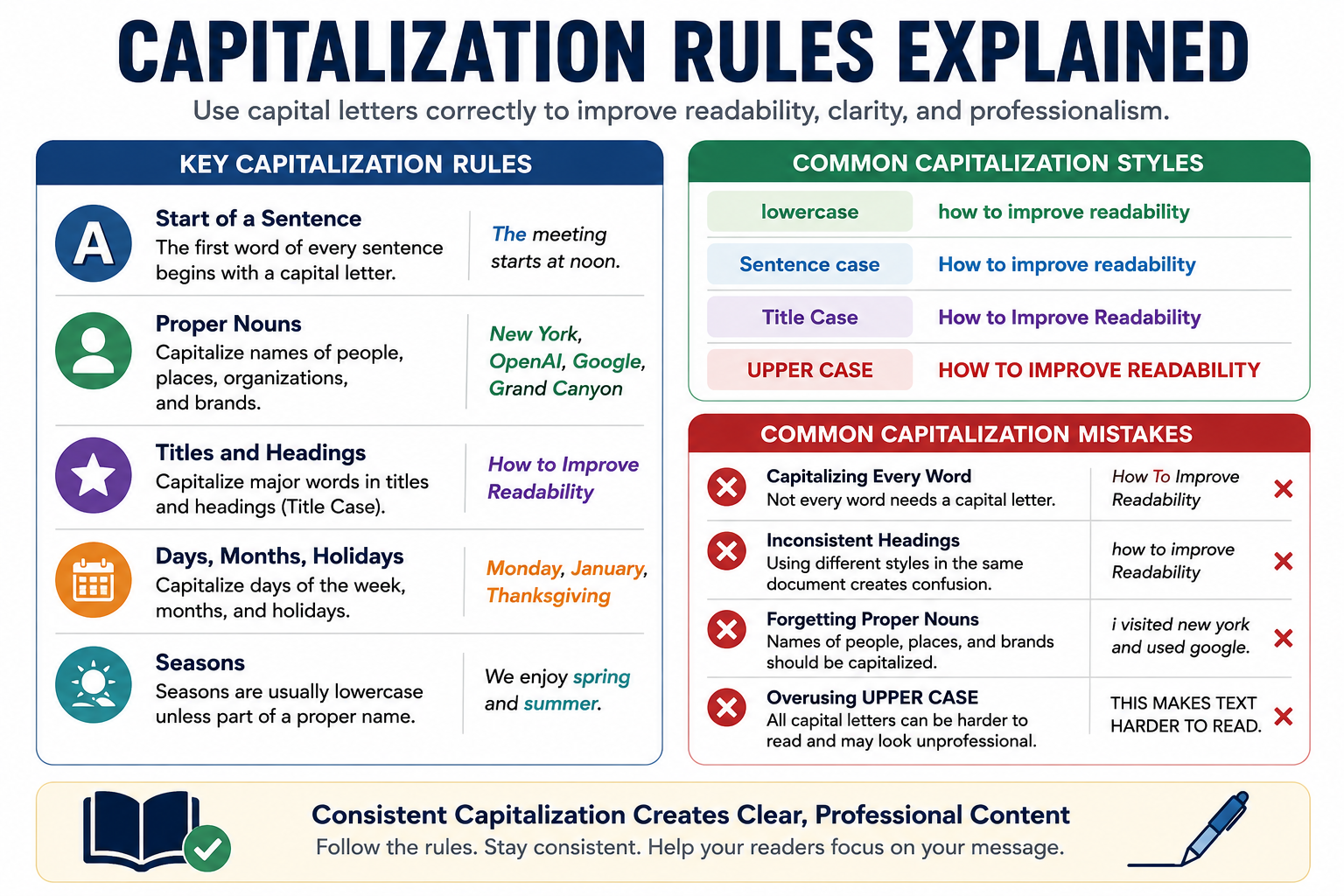
Capitalization rules help determine which words should begin with a capital letter and which should remain lowercase. Following consistent capitalization rules can improve readability, organization, and professionalism across many types of writing.
Whether you’re creating articles, emails, reports, website content, presentations, or social media posts, proper capitalization helps readers understand information more easily and improves overall readability.
Why Are Capitalization Rules Important?
Capital letters help readers identify important words, names, titles, and sections of content.
Benefits of proper capitalization include:
- Improved readability
- Better organization
- Increased consistency
- More professional presentation
- Easier navigation of content
- Clearer communication
As a result, readers can process information more quickly and understand content with less effort.
Common Capitalization Rules
Although style guides may vary slightly, several rules are widely used.
Capitalize the First Word of a Sentence
The first word of every sentence typically begins with a capital letter.
Example:
The meeting starts at noon.Capitalize Proper Nouns
Names of specific people, places, organizations, and brands are usually capitalized.
Examples:
- New York
- OpenAI
- Grand Canyon
Capitalize Titles and Headings
Many writers use title case when creating article titles, headlines, and headings. Consistent capitalization is also important when creating headings that are easy to scan and understand.
Example:
How to Improve ReadabilityLearn more in our guide: What Is Title Case?
Capitalize Days, Months, and Holidays
Examples include:
- Monday
- January
- Thanksgiving
However, seasons such as spring, summer, fall, and winter are usually lowercase unless part of a proper name.
Common Capitalization Styles
Different writing situations may require different capitalization approaches.
| Style | Example |
|---|---|
| lowercase | how to improve readability |
| Sentence case | How to improve readability |
| Title Case | How to Improve Readability |
| UPPER CASE | HOW TO IMPROVE READABILITY |
Understanding these styles can help create more consistent content and support effective writing structure.
Common Capitalization Mistakes
Capitalizing Every Word
Not every word needs a capital letter. Many style guides leave certain short words lowercase.
Inconsistent Headings
Using multiple capitalization styles throughout the same document can create confusion.
Forgetting Proper Nouns
Names of people, places, organizations, and brands generally require capitalization.
Overusing UPPER CASE
Using all capital letters can make content more difficult to read and may appear unprofessional.
Capitalization and Readability
Capitalization plays an important role in content presentation.
| Capitalization Practice | Potential Benefit |
| Consistent Headings | Easier navigation |
| Proper Nouns Capitalized | Improved clarity |
| Consistent Style | Better organization |
| Clear Formatting | Improved readability |
Proper formatting can also support readability. Learn more in our guide: What Is Text Formatting?
Use Capitalization Consistently
Whether you’re writing articles, emails, reports, presentations, or website content, following consistent capitalization rules can improve readability and professionalism. Applying the same style throughout a document helps create content that is easier to read, understand, and navigate.
FAQs
Capitalization rules determine when words should begin with a capital letter and when they should remain lowercase.
Proper capitalization improves readability, organization, and consistency.
Common examples include the first word of a sentence, proper nouns, titles, headings, days of the week, months, and holidays.
Not always. Many style guides use title case rules that leave certain short words lowercase. Learn more in our guide: Title Case Rules Explained.
Yes. Consistent capitalization can make content easier to scan and understand.